Viña del Mar
My Tender MatadorViña del Mar is the coastal setting to which the Queen of the Corner is taken as Santiago comes under military siege in September 1986. A place she has never visited, it first appears as a carefully staged refuge from the searches and danger closing around her; its apparent calm cannot entirely separate her from the dictatorship’s violence or from the unreturned love that shapes her departure.
Arrival and Setting
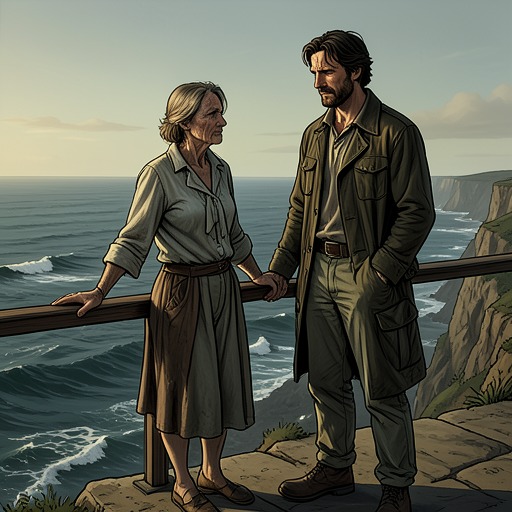
As she leaves Santiago with Laura and a young driver, the Queen reads the road signs and realizes they are taking the route to Viña del Mar. Their journey is tense: Laura repeatedly lights cigarettes and stubs them out without smoking. The city appears around a bend, with Mediterranean-style mansions and an early-morning quiet populated by domestic workers, Catholic-school students, and an elderly woman in a wheelchair. To the Queen, the resort resembles an old film of the Côte d’Azur, a world apart from the working-class beach at Cartagena she remembers from an earlier trip.
That contrast is not simply scenic. Viña’s reputation as a place for tourists and “beautiful people” marks its distance from the poor Santiago neighborhood the Queen has left, while her own limited belongings and uncertainty about money make her an outsider within its elegance. When Laura leaves her at a café near the beach, the Queen admits she has no money. The waiter seats her at the first table on the left, where the sea seems to offer the possibility of a different country, untouched by the atrocities being concealed elsewhere. He gives her a mineral water on the house.
A Refuge Under Watch
The café is a planned meeting point, not a destination the Queen has chosen for herself. Laura instructs her to enter alone, sit at the first table on the left, order something, and wait without speaking to anyone. The Queen has been promised a meeting with Carlos, but she worries that the move may be a way for his associates to remove her from Santiago without giving her any support. The waiter’s kindness and the view offer brief reassurance; neither resolves her uncertainty.
Outside the café, the coastal road is under military control. Naval infantrymen stop and search vehicles, request identification, and arrest people they consider suspicious. The Queen has no identity card, a vulnerability sharpened by the ordinary procedures of the checkpoint. The route to the seaside therefore remains bound to the repression she has escaped: Viña provides a place to wait, but not freedom from the state’s capacity to inspect and detain.
The Queen, Carlos, and Separation
Carlos eventually appears at the café. For the Queen, his arrival answers the fear that she has been taken away and forgotten, but it does not transform their relationship into the romance she longs for. She has protected his associates and helped them at considerable personal risk; Carlos gives her money for lodging and expenses for at least a few months, until she can return to Santiago. He describes the arrangement as protection and assistance rather than payment, while she challenges the group’s earlier lack of trust and the way they have left her out of their decisions.
The farewell makes the divide between practical care and romantic hope unmistakable. Carlos takes her hands and kisses them, thanking her for what she has done, especially for him. When she asks what would repay her, she asks only for the endearment she associates with their bond: “My tender matador.” The phrase carries her longing, but the meeting offers no promise of a shared life. Viña is thus both a place where she is reunited with Carlos and the setting in which his gratitude and their separation become painfully clear.
Presidential Security and Narrative Irony
Viña del Mar is also associated with Cerro Castillo, where the president spends the summer. From the residence’s terrace, Lucy watches bathers through binoculars and complains that a woman is wearing a bathing suit identical to hers, bought at Falabella, a department store patronized by lower-class shoppers. Her irritation over clothing and status unfolds against the president’s sense that the residence is a safe fortress after the attack on his motorcade. The contrast places elite anxieties beside the military searches and danger faced by ordinary people on the coastal road.
That sense of safety proves unstable. Augusto Pinochet relaxes at Cerro Castillo, imagining the hilltop house as protected, while the sound of the sea and then a helicopter enter his dream of danger. The narrative makes Viña’s apparent distance from Santiago’s crackdown ironic: it is at once a temporary refuge for the Queen and a presidential sanctuary haunted by the possibility of renewed attack. The city’s coastal beauty offers a pause, not an escape from the political violence that governs the characters’ movements.